Why Billions of Players Are Already Online — and Western Web3 Devs Have No Idea How to Reach Them
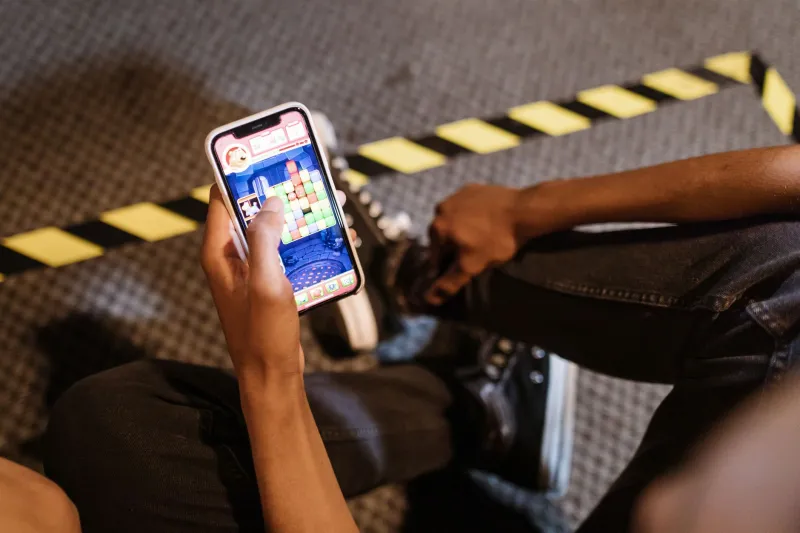
Here's a number worth sitting with: roughly 60% of the world's internet users access the web exclusively through a smartphone. Not a laptop. Not a gaming PC. A phone — often a mid-range or budget Android device running on a 3G or patchy 4G connection. In Southeast Asia, South Asia, and large parts of East Asia, this isn't the exception. It's the norm.
Now ask yourself: how many Western Web3 games are actually built for that user?
The honest answer is almost none. And that gap — that enormous, stubbornly ignored gap — is exactly where Asian blockchain gaming studios have been quietly building an empire.
The Spec Problem Nobody Wants to Talk About
When a US-based Web3 studio ships a new blockchain game, the baseline assumptions are usually pretty generous. Fast internet. A decent processor. Enough RAM to run MetaMask alongside the game client. Maybe even a desktop browser. These assumptions feel reasonable in San Francisco or Austin. They're basically fiction for a player in Cebu, Chiang Mai, or Colombo.
Asian studios — particularly those based in the Philippines, Vietnam, Thailand, and Indonesia — had to confront this reality from day one. Their core audience wasn't playing on a $2,000 gaming setup. They were playing on a $150 Xiaomi or a secondhand Samsung, using mobile data that gets throttled after a few gigabytes. So developers built accordingly.
Games like those coming out of Philippine and Vietnamese studios prioritize what engineers call "graceful degradation" — the ability to deliver a functional, enjoyable experience even when hardware or connectivity falls short. Lighter asset loads. Compressed graphics that still look sharp on smaller screens. Wallet integrations that don't require browser extensions or complicated seed phrase management. Gameplay loops designed around short sessions, because a lot of these players are gaming during a commute or a lunch break, not a four-hour raid night.
The result? Crypto games that actually work for the people most likely to benefit from blockchain-based earning mechanics.
What "Mobile-First" Actually Means in Practice
It's easy to slap "mobile-first" on a press release. It's harder to actually mean it. Here's what it looks like when Asian studios do it for real.
Wallet UX that doesn't punish beginners. One of the biggest friction points in Western Web3 gaming is the wallet setup process. Seed phrases, gas fees, network switching — it's a nightmare for anyone who isn't already crypto-native. Asian platforms, particularly those targeting emerging markets, have largely moved to custodial or semi-custodial wallet models with social login options. Players sign up with a phone number or a Google account. The blockchain stuff happens in the background. They earn, they spend, they trade — often without ever seeing a private key.
Tiny file sizes, big gameplay. Some of the most popular blockchain games in Southeast Asia have initial download sizes under 100MB. That's not an accident. Developers know that a large chunk of their audience has limited storage and pays per megabyte of data. Keeping the install small removes a real barrier to entry that Western studios rarely even consider.
Offline-capable mechanics. Intermittent connectivity is a fact of life in many parts of Asia. Smart studios build games where certain actions — resource gathering, crafting, casual gameplay loops — can queue up offline and sync when the connection returns. It's a technical lift, but it means the game stays playable even when the signal drops.
Localized payment rails. This one's huge and consistently underestimated by US investors. Asian platforms have integrated with GCash in the Philippines, GoPay in Indonesia, TrueMoney in Thailand, and MoMo in Vietnam. Players can cash out earnings directly to these wallets, which they already use for groceries and utility bills. The on-ramp and off-ramp friction that kills Western crypto gaming retention? Largely solved.
The Market Size US Investors Keep Miscalculating
Let's put some numbers on this. The Asia-Pacific mobile gaming market was valued at over $100 billion in 2023. The Philippines alone has more than 43 million active mobile gamers. Vietnam has roughly 35 million. Indonesia tops 100 million. These aren't fringe markets — they're some of the most engaged gaming populations on the planet, and they skew young, digital-native, and increasingly comfortable with crypto concepts thanks to the play-to-earn wave that swept the region a few years back.
When US investors evaluate blockchain gaming projects, they tend to benchmark against Western gaming demographics. That's a mistake. The total addressable market for mobile-optimized crypto games in Asia is orders of magnitude larger than anything you'd calculate using North American or European user data. And because the cost of user acquisition in these markets is dramatically lower — we're talking a few dollars per install in some regions versus $20-$40 in the US — the unit economics for well-designed Asian platforms look almost absurdly favorable by comparison.
What This Means If You're Watching from the US
For American investors tracking the Web3 gaming space, the accessibility gap represents both a warning and an opportunity.
The warning: if you're betting on Western Web3 gaming studios to capture global market share, look hard at whether their tech stack can actually serve users outside of high-income, high-bandwidth markets. A lot of the most-hyped projects can't. They're beautiful on a MacBook Pro and basically unplayable on a $120 Android. That's not a minor product issue — it's a fundamental addressable market problem.
The opportunity: platforms that have already cracked the low-spec, mobile-native, emerging-market puzzle are sitting on user bases that are growing fast and deeply undervalued by Western capital. The infrastructure is there. The players are there. The earning mechanics are there. What's often missing is the kind of institutional attention that comes when US investors actually start paying close attention to what's happening in Manila, Ho Chi Minh City, and Jakarta.
At CryptoKeo555, we've been watching this space closely, and the trajectory is pretty clear. The next wave of Web3 gaming growth isn't going to come from a studio in Seattle or New York building another high-fidelity NFT shooter. It's going to come from a team in Southeast Asia that already knows how to ship a game that runs on a $150 phone, pays out in local currency, and keeps a 19-year-old in Quezon City coming back every single day.
The accessibility problem that's quietly strangling Western Web3 adoption? Asia already solved it. The question is whether US investors are paying attention before the rest of the market catches on.