The Quiet Exodus: Why American Gamers Are Ditching US Crypto Games for Asian Platforms That Actually Pay
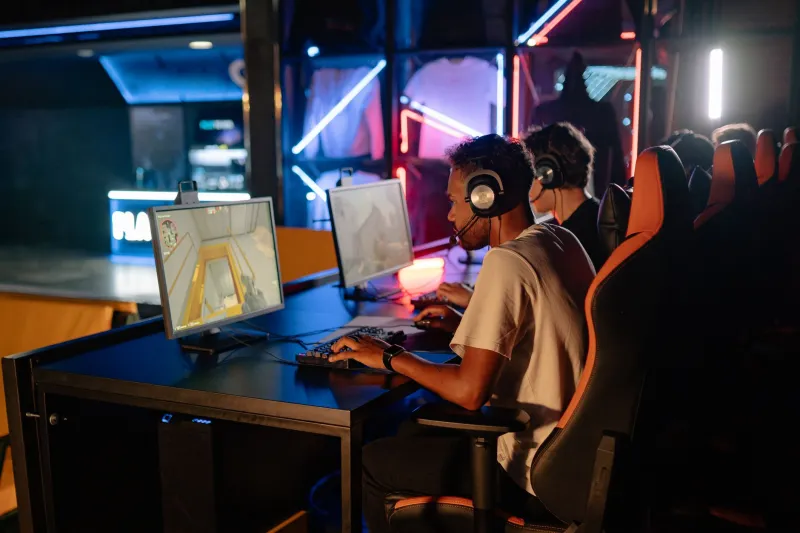
Spend enough time in the right Discord servers and subreddits, and you'll start to notice a pattern. American gamers — the kind who were genuinely excited about play-to-earn back in 2021 — have been quietly packing their digital bags. They're not quitting blockchain gaming. They're just doing it somewhere else.
The destination, more often than not, is Asia.
This isn't a trend that's been loudly announced or covered in the mainstream gaming press. It's happening in the margins, in invite-only communities, in Telegram groups where people share referral links to games that most US-based crypto journalists have never heard of. But the numbers don't lie — and the economic logic behind this migration is worth unpacking carefully.
How Western Crypto Gaming Destroyed Its Own Credibility
To understand why American players are looking east, you first have to understand how thoroughly the Western blockchain gaming industry torched its own reputation.
The play-to-earn boom of 2021 was built on a fundamental economic contradiction. Games like Axie Infinity promised players that they could earn real money just by playing — and for a while, they could. But the entire model depended on a constant stream of new players buying in at higher prices to sustain the rewards for existing ones. It wasn't a game economy. It was a pyramid with better graphics.
When the new player flow slowed, the whole thing collapsed. SLP — Axie's reward token — went from $0.35 to fractions of a cent. Players in the Philippines who had quit day jobs to grind Axie full-time got absolutely wrecked. Western studios rushed to clone the model, and most of those games didn't even make it as far as Axie did before imploding.
The result: a massive cohort of US gamers who tried play-to-earn, lost money or time, and came away deeply skeptical. Rightfully so.
The Asian Design Philosophy That Changes Everything
Here's what those same burned players are discovering when they wander into certain Asian-developed blockchain games: the design philosophy is fundamentally different.
Western crypto games, broadly speaking, were built by people who came from finance and saw gaming as a delivery mechanism for token economics. The game was secondary. The yield was the product.
A lot of the most compelling Asian blockchain titles were built by people who came from gaming first. Studios in South Korea, Japan, and Vietnam with deep roots in traditional game development — the kind of teams that shipped successful MMOs and mobile titles before blockchain existed — approached the problem from the opposite direction. They asked: how do we build a game people actually want to play, and then layer in sustainable earning mechanics?
The difference in output is striking.
Games that have actual gameplay loops: Several Korean-developed blockchain RPGs have full quest systems, PvP ladders, guild mechanics, and seasonal content updates. Players aren't just grinding a single action for token rewards — they're playing a game that happens to have blockchain-based ownership built in.
Earning tied to skill and contribution: Rather than paying everyone equally for time spent, the better Asian models reward players based on performance, rare item discovery, or contribution to guild economies. This creates a healthier distribution of rewards and reduces the farming-bot problem that killed so many Western titles.
Deflationary token mechanics: Some of the more sophisticated platforms have built genuine token sinks into their economies — crafting costs, upgrade fees, tournament entry stakes — that create organic demand for the reward token rather than relying purely on new player inflows.
What the Token Economics Actually Look Like
Let's get into the specifics, because this is where the rubber meets the road for anyone considering making the jump.
The most sustainable Asian blockchain games tend to operate with what developers call a "dual currency" model — but executed very differently from the failed Western versions. There's typically a hard-capped governance token with real utility (voting on game updates, staking for premium features, entry into high-stakes tournaments) and a softer in-game currency used for everyday rewards and crafting.
Crucially, the in-game currency isn't the thing that gets listed on major exchanges and pumped by speculators. It's designed to stay within the game's ecosystem, which keeps its value more stable and prevents the inflationary death spiral that killed Axie's SLP.
The governance token, meanwhile, accrues value from actual platform revenue — tournament fees, marketplace transaction cuts, premium cosmetic sales. When the game grows, the token grows. When the game shrinks, the token reflects that too. It's not a perfect system, but it's honest in a way that most Western crypto games never were.
The Community Factor
There's something else going on here that's harder to quantify but equally important: community structure.
Asian gaming communities — particularly in Southeast Asia — have a long tradition of organized guild economies. Players in the Philippines, Indonesia, and Vietnam were running sophisticated scholarship programs and guild management systems in games like Axie years before Western players figured out that was even possible. That organizational culture has carried over into the newer generation of blockchain games.
American players migrating into these communities often report a different vibe than what they experienced in US-centric crypto gaming spaces. Less hype, more strategy. Less focus on token price, more focus on in-game progression and sustainable earning. It's a culture that grew out of actual gaming rather than financial speculation, and it shows.
What This Means for the Industry
The migration of American players toward Asian blockchain games isn't just an interesting footnote — it's a signal about where the next phase of this industry is being built.
US game studios have largely retreated from blockchain gaming after the 2022 crash. The major publishers who dabbled — and there were several — quietly shelved their Web3 projects when the market turned and the player backlash got loud. The venture capital that was flooding into Western crypto gaming dried up.
Meanwhile, Asian studios kept building. They learned from the failures, iterated on the economics, and kept shipping. The pipeline of blockchain-native titles coming out of Korea, Vietnam, and Thailand over the next 18 months is genuinely impressive — and most of it isn't getting covered by the US gaming press.
For American players willing to look past the geographic unfamiliarity and do a little research, the opportunity is real. The games are better. The economics are more honest. And the communities are, frankly, more fun to be part of.
The next great gaming revolution isn't being built in San Francisco or Austin. It's being built in Seoul, Ho Chi Minh City, and Bangkok — and the players who figure that out early are already ahead.