Forget the Whitepaper: How Asia's Micro-Influencer Wave Is Teaching Crypto Better Than Any Exchange Ever Did
Let's be honest for a second. If you've ever tried to learn crypto through a major Western exchange's official resources, you probably felt like you were studying for a bar exam — in a language you don't speak. Coinbase Learn, Kraken's educational hub, Gemini's Cryptopedia — they're not bad, exactly. But they're built for compliance, not connection. They're polished, carefully worded, and about as warm as a terms-of-service agreement.
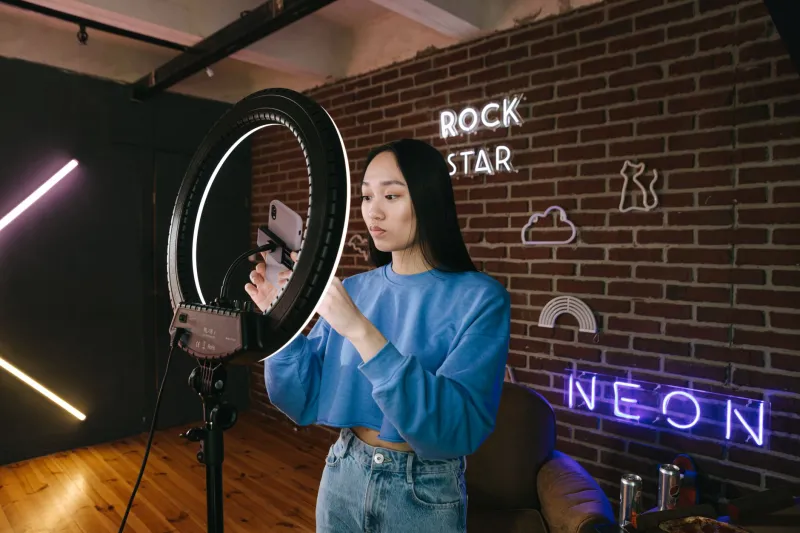
Meanwhile, halfway around the world, a 24-year-old in Manila is pulling 800,000 TikTok views explaining liquidity pools using bubble tea as a metaphor. And people actually get it.
This is the gap. And it's widening fast.
The Gatekeeping Problem No One Wants to Admit
Western crypto education has a class problem. The way most major platforms present information assumes you already have a baseline — that you've heard of DeFi, that you understand what a wallet address is, that you're not completely lost when someone says "gas fees." There's an invisible velvet rope, and if you don't already know the password, the content doesn't really help you find it.
This isn't entirely intentional. A lot of it comes down to regulatory pressure. US-based exchanges operate under intense scrutiny, which means their educational content gets lawyered to death before it ever reaches a user. Every sentence gets hedged. Every claim gets softened. The result is content that technically says something without actually teaching anything.
Compare that to what's happening in Southeast Asia, South Korea, Japan, and increasingly India. The crypto education landscape there looks completely different — and it's being built by people who didn't ask permission to start.
Small Accounts, Big Impact
The term "micro-influencer" usually means someone with between 10,000 and 100,000 followers. In Western social media circles, that's considered small-time. In Asia's crypto space, it's a sweet spot that's producing some of the most effective financial education content on the internet right now.
These creators aren't backed by venture capital. They're not on exchange payrolls. They're traders, community managers, gaming guild members, and former retail workers who got into crypto, figured something out, and decided to share it. Their content lives on TikTok, YouTube Shorts, Discord servers, and Telegram groups — formats built for speed, accessibility, and actual human conversation.
What makes their approach work isn't production quality or follower count. It's trust. When a creator in Thailand breaks down a new staking protocol by showing their actual wallet movements in real time, that's not a marketing deck. That's someone putting their credibility on the line. Audiences feel the difference immediately.
Platforms like CryptoKeo555 have been built around exactly this kind of community-first energy — the idea that blockchain doesn't have to be intimidating, and that the best teachers are often the ones who just learned the lesson themselves.
Why US Investors Are Tuning In
Here's where it gets interesting for American audiences. A growing number of US-based retail investors — particularly younger ones who came up on YouTube tutorials and Reddit threads — are actively seeking out Asian crypto content creators even when language is a barrier. Subtitles help. But honestly, a lot of these creators are already making English-language content specifically because they know the demand is there.
The appeal isn't exotic or novelty-driven. It's practical. These creators cover projects that Western exchanges haven't listed yet. They explain mechanics that Western educational content glosses over. They talk about blockchain gaming, digital asset earning models, and Web3 platforms that are already mainstream in Southeast Asia but still feel fringe to most American users.
For a US investor trying to get ahead of the curve, following a Filipino Web3 gaming educator or a Korean DeFi analyst on YouTube isn't a quirky hobby — it's actual alpha.
The Discord Difference
If TikTok is where Asian micro-influencers find their audience, Discord is where they keep them. The community infrastructure built around these creators is genuinely impressive. You'll find servers with tens of thousands of active members where mods are answering questions at 2 a.m., where weekly AMAs happen without fail, and where newcomers aren't just tolerated — they're actively welcomed and walked through the basics.
This is night-and-day different from the support experience at most major Western platforms, where customer service means submitting a ticket and hoping someone responds before your question becomes irrelevant. The Discord-native education model creates a feedback loop: creators learn what their audience doesn't understand, make content addressing it, and the community gets smarter together. It's organic. It scales. And it builds the kind of loyalty that no corporate onboarding sequence can manufacture.
What Legacy Platforms Are Missing
The uncomfortable truth for established Western exchanges is that their educational moat is eroding. They spent years building out knowledge bases and learning modules, assuming that being the official source of information meant being the trusted source. That assumption is getting challenged in real time.
Trust in 2024 doesn't come from a brand logo. It comes from consistency, transparency, and the sense that someone is talking to you rather than at you. Asian micro-influencers have figured this out instinctively, partly because many of them come from communities where financial institutions have historically been inaccessible or unreliable. They know what it feels like to be locked out, so they build doors instead of walls.
For legacy platforms, the play isn't to copy the format — awkward corporate TikToks are painful to watch. The play is to get out of the way and let authentic voices lead. Partner with community educators. Fund grassroots content without strings attached. Stop treating educational content like a compliance exercise and start treating it like what it actually is: the most important product you offer.
The Bigger Picture
Crypto's next hundred million users aren't going to come from whitepapers or exchange-sponsored webinars. They're going to come from a teenager in Ohio watching a short video by a creator in Jakarta who explained DeFi yields better in four minutes than Investopedia did in four thousand words.
The Keo effect — the idea that smaller, community-driven platforms and voices can outperform institutional giants by simply being more human — isn't just a content strategy. It's a signal about where trust is migrating in the broader financial world. And for US investors paying attention, it's also a map of where the next wave of opportunity is likely to emerge.
The gatekeepers didn't open the door. So someone else built a window.