Lost in Translation: The Real Reason Western Gamers Keep Striking Out on Asian Crypto Platforms
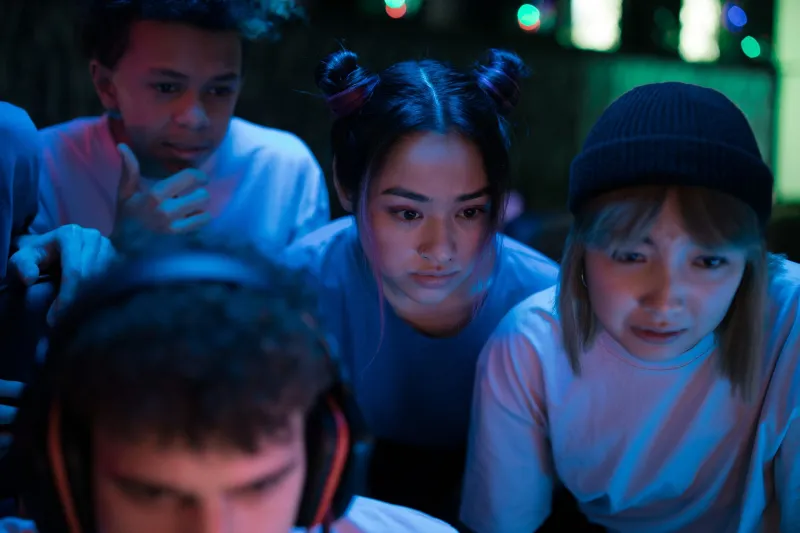
There's a pattern that plays out constantly in the Asian crypto gaming space, and if you've spent any time in these communities, you've probably watched it happen. A Western gamer — usually American, occasionally European — shows up in a Discord server for a Southeast Asian blockchain game. They ask a few questions, get some answers, maybe join a guild. A few weeks later, they're gone, posting somewhere on Reddit about how the platform was confusing, the community was cliquey, or the economics didn't work out.
Here's the uncomfortable truth: the platform usually wasn't the problem.
What these players ran into was a cultural architecture they didn't recognize — and because they didn't recognize it, they tried to navigate it using frameworks that simply don't apply.
Two Very Different Definitions of "Community"
Let's start with the word that gets thrown around most: community.
In Western gaming culture — and especially in the crypto-adjacent spaces that grew up around it — "community" tends to be transactional. You join a Discord server to get information. You participate in governance votes to influence tokenomics in your favor. You engage with other players to find trading partners or teammates. The relationship is instrumental. You're there because it benefits you, and everyone understands that.
There's nothing wrong with this model. It's efficient. It scales. It fits neatly with Western individualist frameworks around markets and competition.
But in the communities built around Asian blockchain gaming platforms — particularly those originating from the Philippines, Vietnam, Indonesia, and Thailand — the architecture is different. Community isn't primarily transactional. It's relational. The expectation is that you build trust over time, demonstrate commitment to the group's success before extracting value from it, and operate within a web of reciprocal obligations that aren't explicitly written down anywhere.
This is sometimes described through the Filipino concept of utang na loob (a debt of gratitude that creates ongoing social obligation), or through the broader East Asian emphasis on maintaining harmonious group dynamics over individual optimization. The specific cultural framing varies by country, but the underlying structure is consistent: relationships come before transactions.
When Western players arrive expecting a transaction-first environment and find something relational instead, they typically do one of two things. They get frustrated that the community seems guarded or slow to open up. Or they try to shortcut the relationship-building phase — and get quietly frozen out.
The Guild System Isn't Just an Organizational Tool
If you've looked at any major Asian P2E platform, you've seen how central guild structures are. In games like Axie Infinity, Pixels, or various titles on the Ronin network, guilds aren't just groups of players who coordinate strategy. They're economic units with real stakes, internal hierarchies, and long-standing reputational systems.
For Western players, guilds often look like clans or teams — something you join to access group benefits and leave when something better comes along. Switching guilds is normal. Shopping around is rational.
In many Asian gaming communities, guild membership carries weight that's closer to a professional reference or a community vouching system. When a guild leader sponsors a new player — particularly through a scholarship arrangement where they lend game assets to someone who can't afford them — they're staking their own reputation on that player's behavior. If the player performs poorly, extracts value without contributing, or leaves abruptly, the guild leader loses face. That's not a minor social inconvenience. It's a meaningful social cost.
This is why Western players who join Asian guilds through scholarship programs often find themselves subject to expectations that feel disproportionate or weirdly personal. Check-ins with guild managers. Expectations of communication during downtime. Pressure to explain decisions that feel like they should be private. From a Western individualist lens, this feels intrusive. From inside the relational framework, it's just what accountability looks like.
Trust Is Earned in Layers — And You Can't Skip Steps
One of the most consistent complaints from Western gamers trying to break into Asian crypto platforms is that the communities feel closed off. Information doesn't flow freely. The best earning strategies aren't openly shared. Veteran players seem to operate in inner circles that newcomers can't access.
This observation is accurate. The interpretation is usually wrong.
The information asymmetry in these communities isn't gatekeeping in the Western sense — it's not about protecting a competitive advantage from rivals. It's about the staged nature of trust. You don't share your best strategies with someone you don't know yet. You share surface-level information, watch how they engage with it, see whether they reciprocate with their own knowledge, and gradually extend more access as the relationship deepens.
Western players who expect full transparency from day one — or who interpret the staged disclosure as hostility — tend to disengage before they reach the layer where things actually get interesting. The players who stick around, contribute consistently to community discussions, and demonstrate patience tend to find that the communities open up significantly over time.
It's worth noting that this dynamic has a practical security function too. Crypto gaming communities that have been around long enough have been burned by bad actors — people who extracted information, manipulated token prices, or ran exit scams. A community that vets newcomers carefully before sharing sensitive strategy isn't being paranoid. It's being smart.
Governance Isn't a Feature — It's a Relationship
Blockchain gaming platforms love to advertise their DAO governance structures. Vote on proposals! Shape the future of the platform! Token holders decide!
In practice, governance participation looks very different across cultural contexts.
Western crypto communities tend to treat governance as a market mechanism. You vote your economic interest. If a proposal benefits your holdings, you vote yes. If it doesn't, you vote no. Discussion is often adversarial — competing interests making their case publicly.
In Asian gaming communities, governance tends to be more consensus-oriented. Major stakeholders often discuss proposals informally before they go to a formal vote. The goal is to arrive at a position that the community broadly supports, not to win a vote through coalition-building. Showing up to a governance forum with a purely self-interested position and arguing it aggressively can damage your standing even if you win the vote.
Western players who participate in Asian platform governance the way they'd participate in a Western DAO often find that they're technically playing by the rules but still losing social capital. The rules are written. The norms aren't.
What Actually Works
None of this means Western gamers can't thrive in Asian crypto gaming communities. Plenty do. But the ones who succeed tend to share a few habits.
They show up consistently before they need anything. They contribute to community discussions even when there's no immediate personal benefit. They ask questions in ways that demonstrate they've done homework, rather than expecting the community to educate them from scratch. They find a bridge figure — often a bilingual player or a guild member with international experience — who can help them read social dynamics they'd otherwise miss.
And most importantly, they accept that the timeline for becoming a trusted community member is longer than they'd like. There are no shortcuts. That's not a bug in these communities. It's load-bearing architecture.
The platforms coming out of Asia aren't going to restructure their communities to accommodate Western expectations. Why would they? Their communities work. If you want access to what they've built, you adapt. That's the deal.
CryptoKeo555 will keep breaking down these dynamics as the space evolves — because understanding the culture is just as important as understanding the tech.