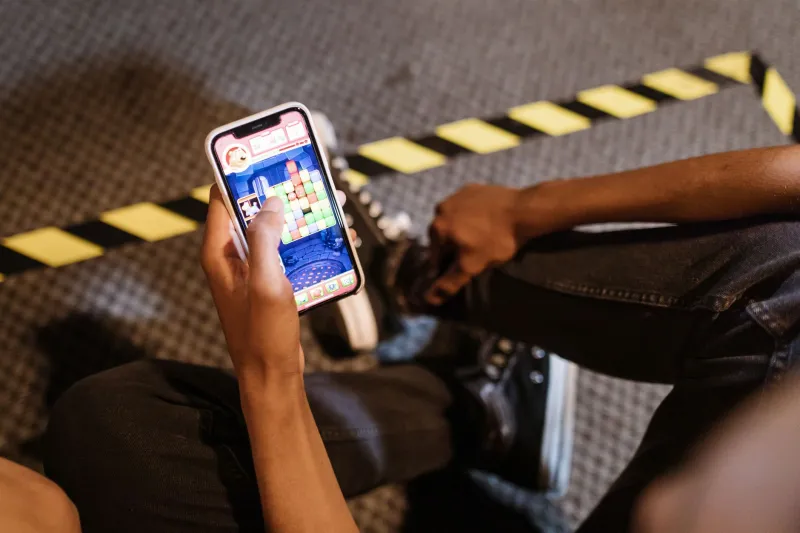
Thumbs Up: Why Asian Crypto Games Built for Your Phone Are Crushing Western PC-First Platforms
Here's a number worth sitting with: roughly 2.8 billion people in Asia access the internet primarily through a smartphone. Not as a secondary device. Not as a backup when the laptop is charging. As the only screen that matters. That single data point reshapes almost everything you thought you knew about where blockchain gaming growth is actually happening — and why Western investors keep showing up late to the party.
The conventional wisdom in US crypto gaming circles still leans hard on PC and console infrastructure. Big downloads, high-spec hardware requirements, complex wallet setups that basically require a YouTube tutorial to navigate. That model makes sense if you're building for a suburban American household with a gaming rig in the spare bedroom. It makes almost zero sense if your target audience is a 24-year-old in Manila, Jakarta, or Ho Chi Minh City whose entire digital life runs through a mid-range Android.
The Infrastructure Gap Nobody's Talking About
Western blockchain gaming studios didn't choose desktop out of arrogance — they chose it because that's what they knew. The early NFT gaming boom happened in spaces already dominated by PC culture: Discord servers, MetaMask browser extensions, Ethereum transactions that required you to understand gas fees before you even loaded the game. The barrier to entry was enormous, and frankly, a lot of Western developers didn't notice because their core early adopter base cleared those hurdles without blinking.
Asian studios looked at the same landscape and made a completely different call. If your user is already living on their phone — banking on it, shopping on it, socializing on it — then forcing them onto a desktop experience isn't just inconvenient, it's a dealbreaker. Platforms built for Southeast Asian and East Asian markets integrated blockchain wallets directly into mobile apps, simplified onboarding to a few taps, and stripped away the technical friction that kills retention before a user ever earns their first token.
The result? Engagement metrics that Western platforms genuinely struggle to match. Daily active user rates on mobile-first Asian crypto games routinely outpace their PC-centric Western counterparts. Session lengths are longer. Retention curves after the first week are steeper. These aren't marginal differences — they're structural advantages baked into the product from the ground up.
What Mobile-First Actually Means in Practice
It's easy to hear "mobile-first" and picture a desktop game that also has an app. That's not what we're talking about. True mobile-first blockchain gaming means the entire economy, the reward loops, the asset trading mechanics, and the social features were architected around touchscreen interaction and intermittent connectivity.
Take games like those built on Ronin Network or the growing wave of titles emerging from studios in South Korea and Vietnam. These platforms assume you might be playing in a jeepney on the way to work, or during a 20-minute lunch break, or while waiting in line at a convenience store. The gameplay loops are tight. The wallet interactions are frictionless. The token reward cycles are calibrated to sessions measured in minutes, not hours.
For a US audience used to thinking about blockchain gaming as something you sit down and commit to — like booting up a Steam title on a Friday night — this feels almost casual. But that's exactly the point. Lower commitment thresholds mean broader user bases. Broader user bases mean more liquidity in the in-game economies. More liquidity means the digital assets players earn actually hold value.
Where US Investors Are Getting the Math Wrong
Here's the uncomfortable truth for anyone allocating capital in the crypto gaming space right now: if you're evaluating projects based on how polished the PC client looks or how impressive the trailer renders are, you're measuring the wrong things for the market that's actually growing.
The Asian mobile gaming market — just the traditional, non-blockchain segment — is already worth more than the entire US gaming industry. Add blockchain mechanics to that foundation and you're not just talking about a niche Web3 play. You're talking about layering financial infrastructure onto one of the most active gaming populations on earth, delivered through the device they already have in their pocket.
Western crypto gaming projects aren't necessarily building bad products. Some of them are genuinely impressive technically. But they're optimizing for a user profile that represents a fraction of global gaming demand, while mobile-first Asian platforms are capturing the other 80% almost by default.
US investors who dig into the actual user data — not just the marketing decks — are starting to notice. Funds that were early to Southeast Asian fintech are applying the same regional lens to blockchain gaming and finding similar dynamics: massive addressable markets, infrastructure-light distribution, and local studios that understand their users in ways that outside competitors simply don't.
The Wallet Problem Western Devs Still Haven't Solved
One specific friction point deserves its own mention: crypto wallet onboarding on mobile. It's been a known problem in the Western Web3 space for years, and the solutions have been... slow. Asian platforms didn't wait for MetaMask to build a better mobile experience. They built their own embedded wallet systems, integrated social logins, and in some cases tied blockchain accounts directly to existing super-app ecosystems that users were already authenticated into.
That's not a small UX improvement. That's removing the single biggest drop-off point in the entire user acquisition funnel. When someone in the Philippines can start earning gaming tokens using their existing GCash-linked identity without ever manually managing a seed phrase, you've unlocked a user base that Western platforms are still theoretically designing for.
The Bigger Picture for the US Crypto Crowd
None of this means Western blockchain gaming is dead. The US market is real, and there's genuine appetite here for crypto-native gaming experiences. But the growth story — the part that actually moves portfolio numbers over the next three to five years — is overwhelmingly mobile, overwhelmingly Asian, and overwhelmingly misunderstood by investors who are still mapping 2021 NFT game assumptions onto a market that has already moved on.
At CryptoKeo555, we've been watching this dynamic play out across Southeast Asia and East Asia for a while now. The studios winning aren't always the ones with the biggest marketing budgets or the flashiest tokenomics whitepapers. They're the ones that understood, from the very first product decision, that the phone in someone's hand is the most powerful gaming platform ever built — and designed everything around that reality.
The desktop isn't dead. But in the blockchain gaming race, it's running a different event entirely.